What it is
The Wilow Meta Ads Library tool lets anyone search a brand and see the Meta ads it is running.
Wilow already collected public ad data to power the product, and it sat behind a login doing one job. The same dataset now runs four surfaces: a free search tool, programmatic brand pages, original research and a connector that lets AI assistants answer from it.
What I did
I built the Ad Library as part of Wilow's marketing, which is my side of the business. The idea was one dataset, four surfaces, with each surface reaching people in a different place.
The free tool launched on trywilow.com on 2026-07-04. The AI-assistant connector went live on 2026-07-16.
The four surfaces
The free search tool
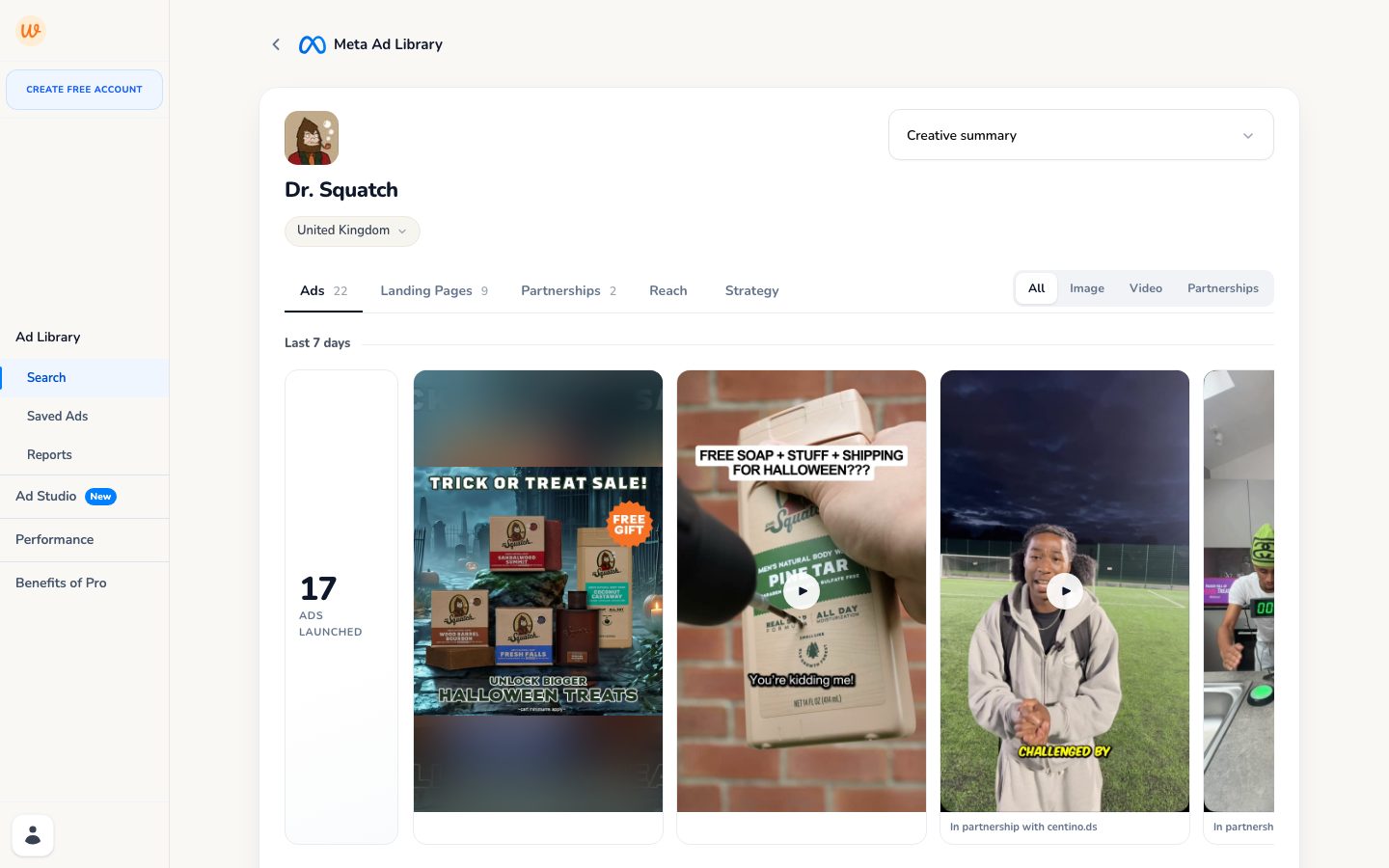
Anyone can search a brand by name and see the ads it is running on Facebook, Instagram, Messenger and Audience Network.
Ads are grouped into those launched in the last 30 days, which shows what a brand is testing, and those live for 90 days or more, which shows what has held up. They are ranked by daily reach, the number of people reached divided by days running.
Filters narrow the view to image, video or paid partnerships, and each ad card links to the landing page it sends traffic to.
Brand pages
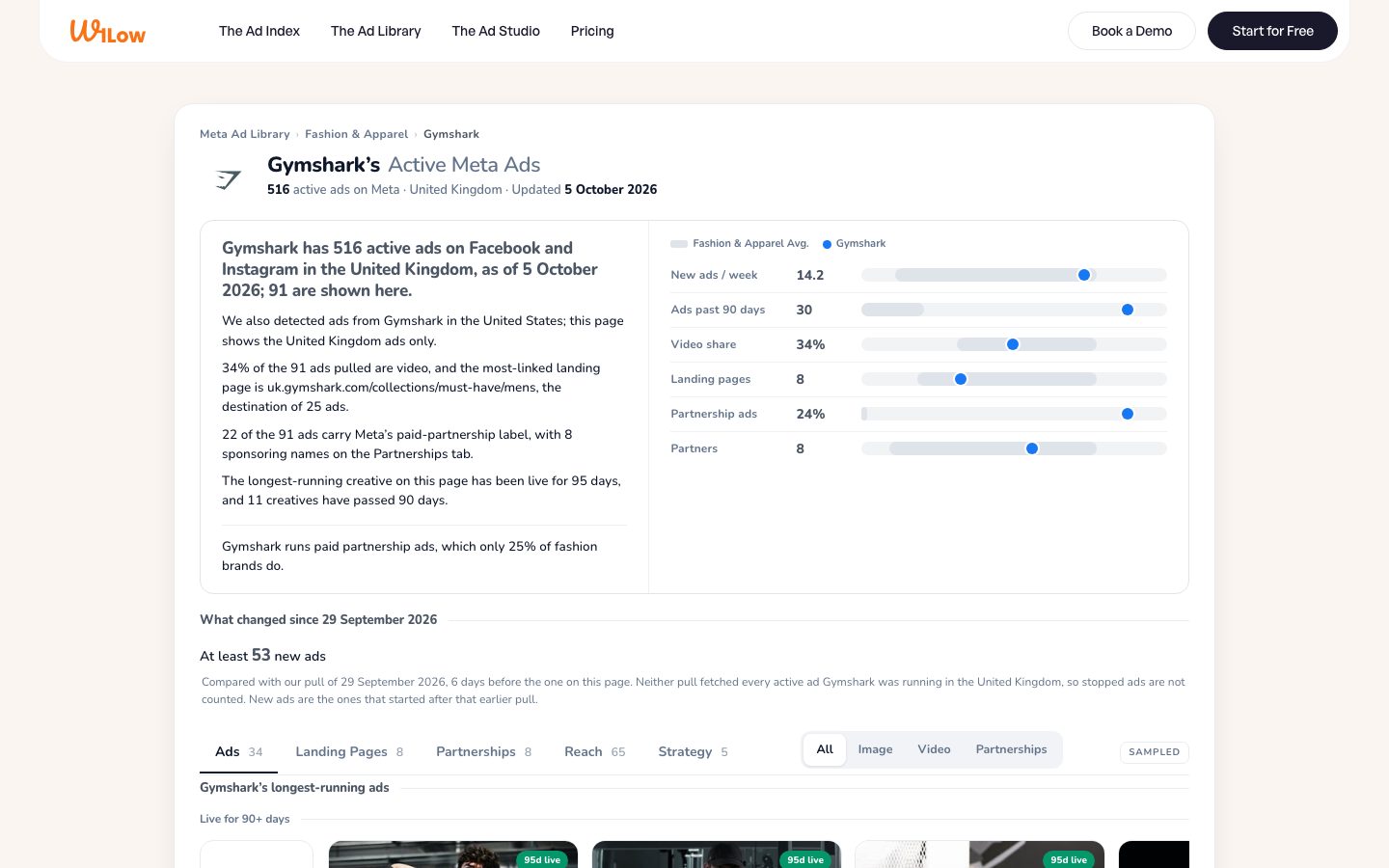
Alongside the search tool sits a page per brand and per industry. They are built to catch the many small searches people make for one brand's ads.
There are more than 130 public brand pages, with more than 20 comparison pages and a handful of long-form learn pages around them.
Original research
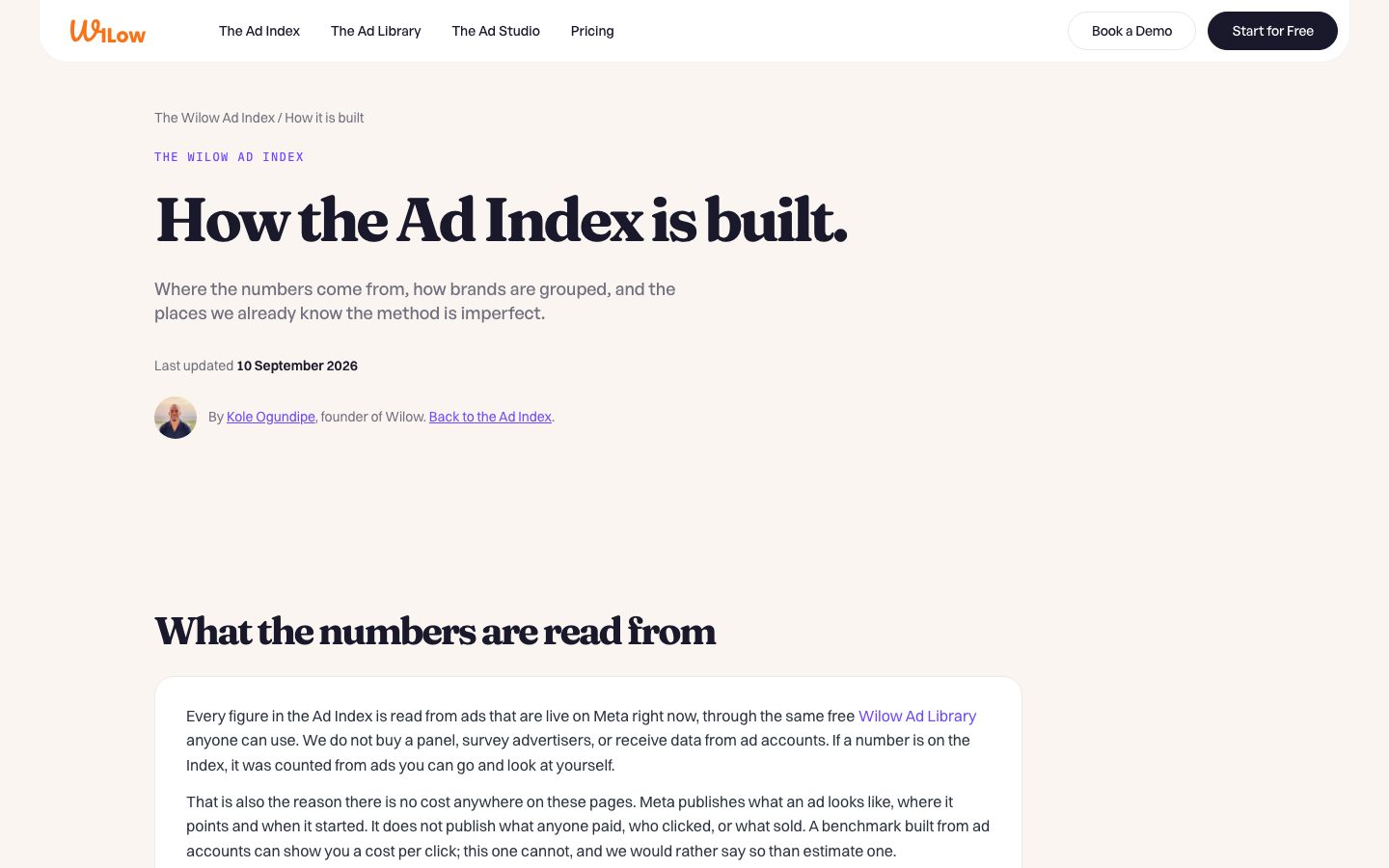
The same data feeds the Wilow Ad Index, a free report of Meta ads benchmarks by industry. A brand joins its panel when someone looks it up in the tool, so the research grows as the tool is used.
A search tool answers one person's question. A benchmark report is something other people can cite.
The AI connector
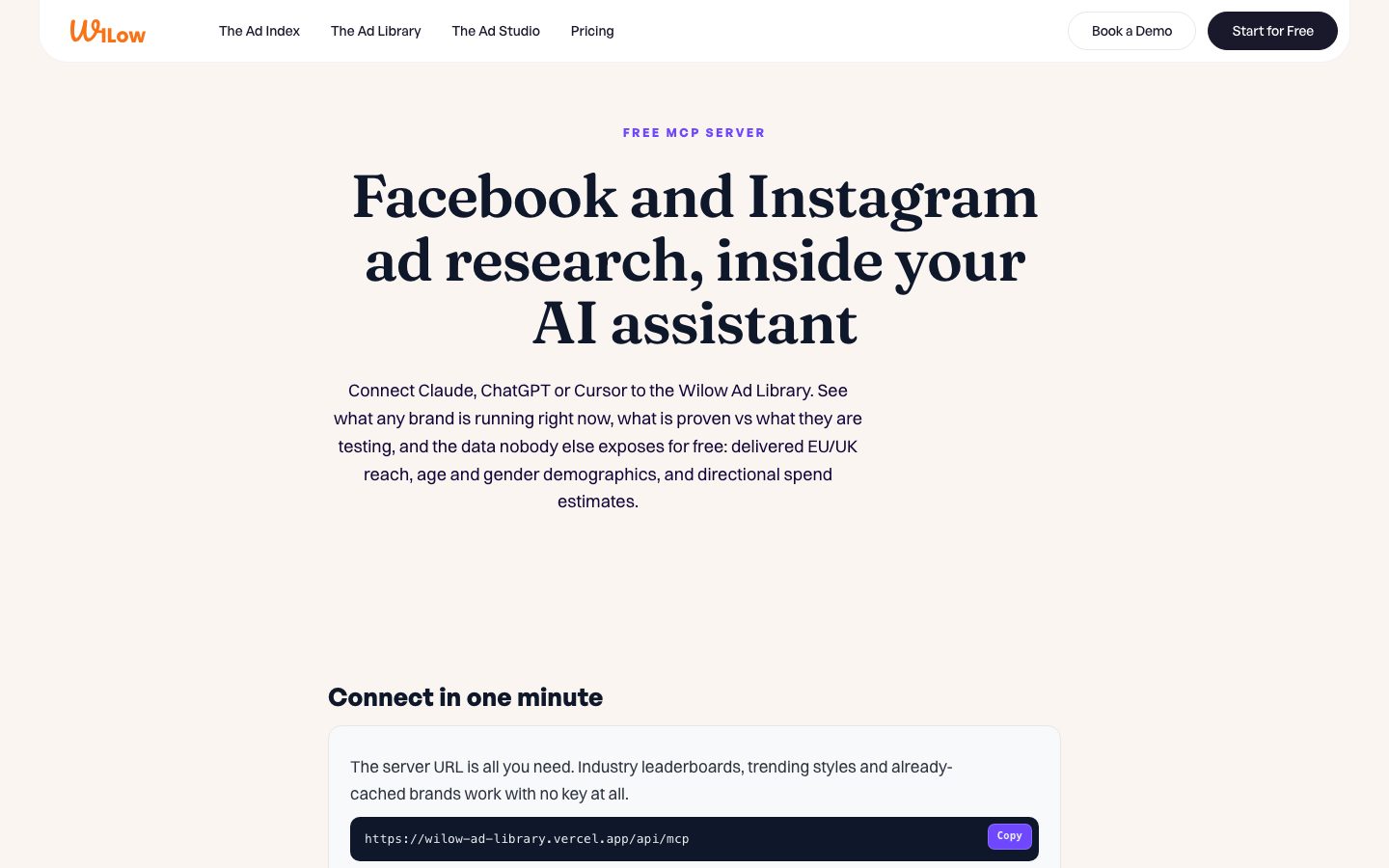
An MCP server at trywilow.com/mcp puts the same ad data inside AI assistants, so they can answer from it at the moment someone asks.
It works with Claude, ChatGPT, Cursor and other assistants that accept MCP connectors. Setup is pasting the server URL into the assistant's settings, and fresh data, such as a new brand search, needs a free access key that comes from an email address.
How the labels are checked
Ad creatives are labelled by a two-pass Gemini pipeline with a human correction step.
The first pass reads the ad copy plus the first ad's landing page and builds a profile of the advertiser and the personas it targets. The second pass watches each creative, tags it and assigns it one persona.
A separate check is then told to try to refute each label. The labeller reports its own confidence, and a model grading its own work is lenient, so that confidence cannot be the gate.
Flagged ads sort to the front of a human review page. Corrections become ground truth, and changed prompts are scored against them on the next run. Repeated corrections become rules in the prompt.
Decisions that shaped it
Search is open with no account. The deeper strategy breakdown asks for an email, and giving one lifts the daily search cap.
The email gates sit where the value is obvious rather than where they are annoying. A visitor has already seen what the tool does before anything is asked of them, and each capture point carries a privacy notice where the email is collected.
Public ad data does not include revenue, so none appears. The one estimate, a directional spend figure in the AI connector, is worked out from reach at a flat CPM and labelled as an assumption.
 Meta
Meta Gemini
 Vercel