
What it is
The Keyword is a digital marketing and technology news publication for senior marketing leaders. It has a weekly email newsletter, a LinkedIn edition of that newsletter, and a website at thekeyword.co with longer-form articles.
It makes money from sponsors, and it also brings readers to Wilow, the software company I run.
What I did
I started The Keyword in July 2021 and still own it. I write the newsletter's feature, approve and send each issue, and carry the byline on each article published since August 2026.
I sold its sponsorships myself. Sponsors have included Pinterest and HubSpot.
I built the system of agents that does the publication's mechanical work, which is why the team is one writer and one assistant.
How it works
Agents scan the news sources and the newsletters we subscribe to, and an editor agent picks at most one story to cover. Its rules for what makes a story worth covering were distilled from 131 items across 20 newsletter issues, then tested blind against 806 sourced stories.
Before anything is written, the agents read a knowledge base of my editorial positions, organised by topic and updated weekly from the newsletter, so an article carries a point of view instead of restating the news.
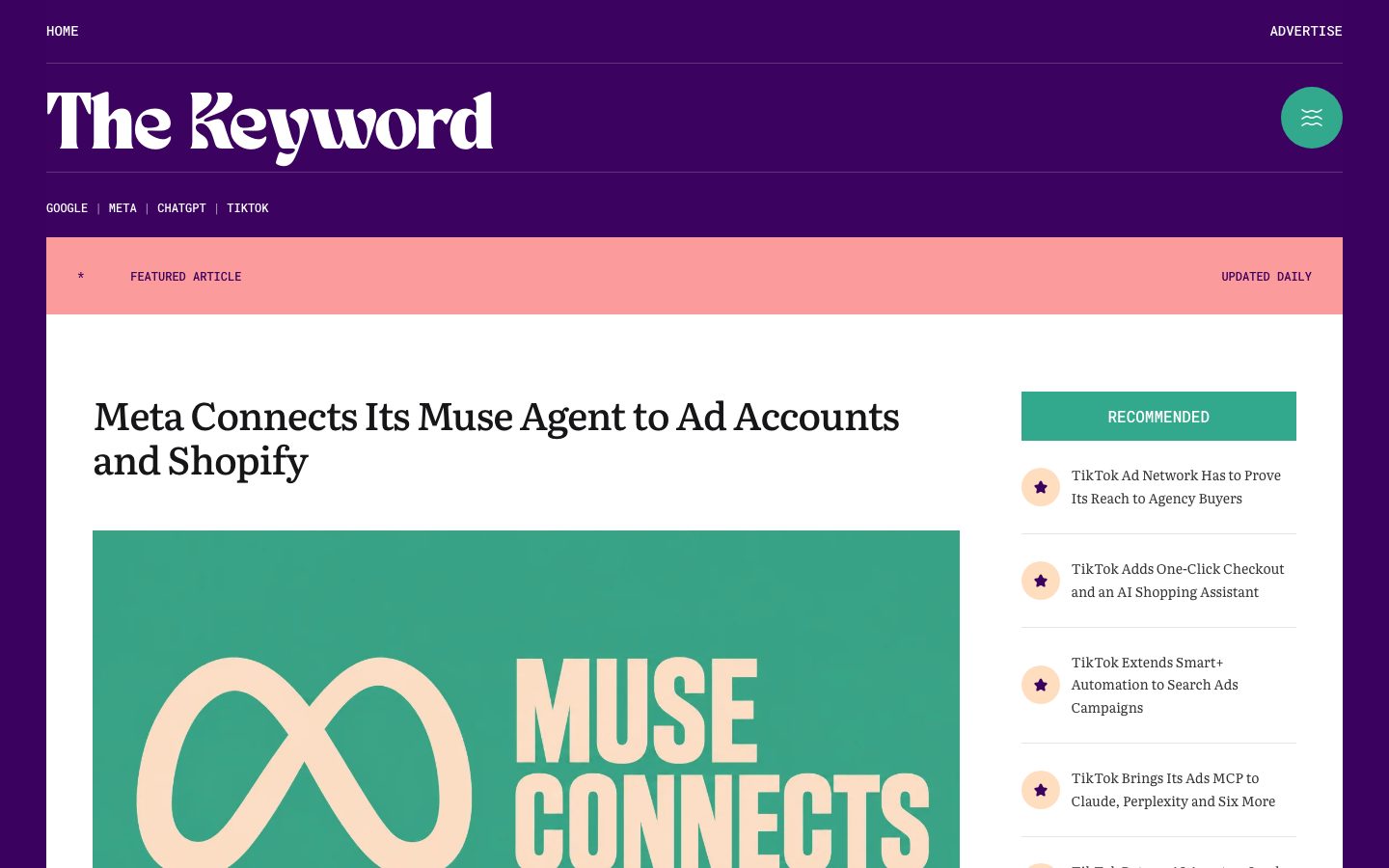
A researcher agent gathers the facts. A writer agent drafts the article, checks it against 12 editorial principles and a 23-item quality checklist, and publishes it to the site with structured data, author attribution and internal links. Another agent makes the cover image.
Internal links run across two sites, so search authority flows toward Wilow.
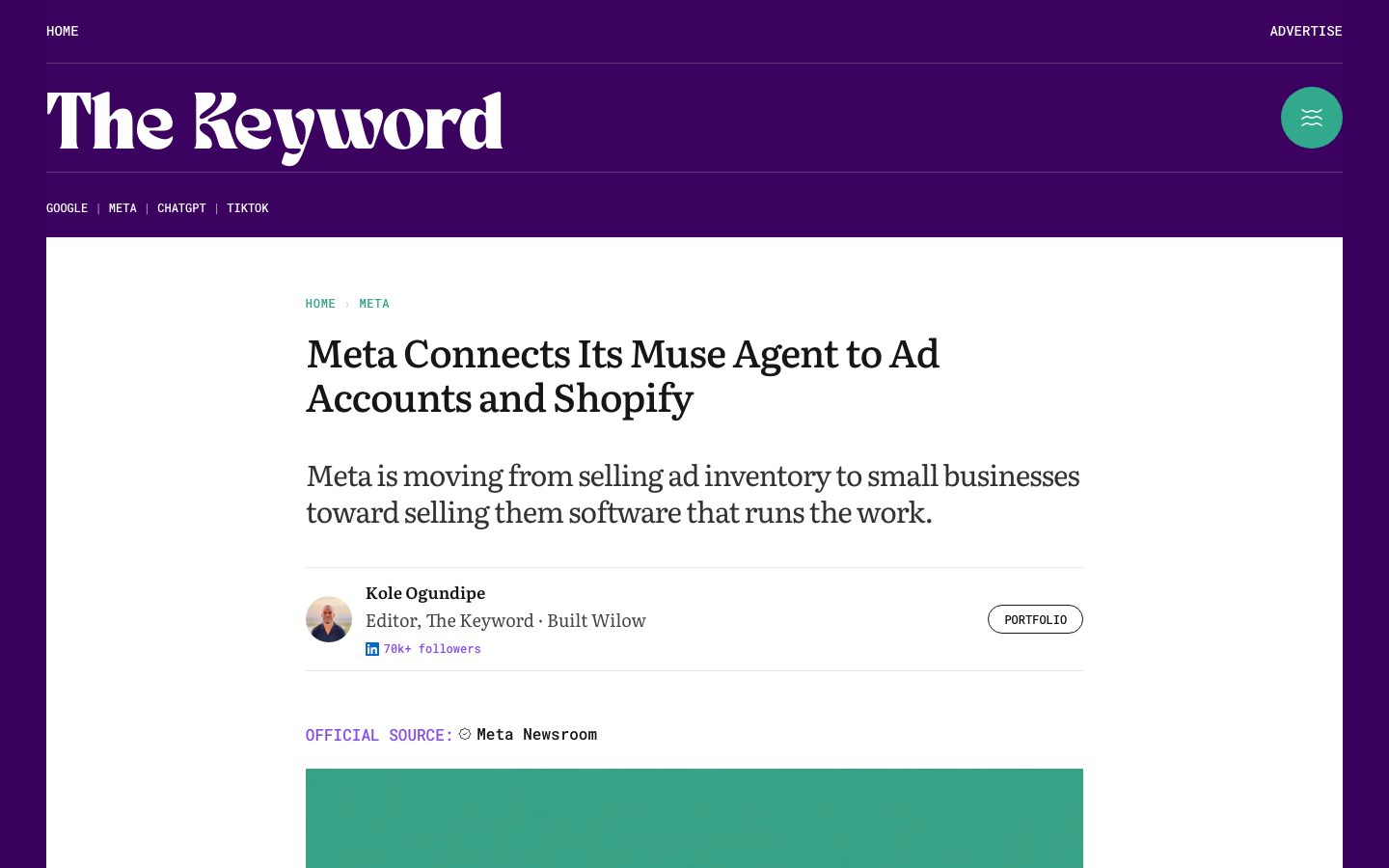
Articles go live without a human step, and I read each one after it publishes and correct it in place. The newsletter is where a human approves before anything is sent.
The numbers
The email list and the LinkedIn newsletter are two separate audiences.
Highlights
- Signed up 7,000+ subscribers to a weekly newsletter with an above average email open rate of 40-45%
- Built a workflow of three AI agents that sourced, curated, researched, wrote and published digital marketing stories
- Created and wrote a performance marketing news website that reached a domain rating of 67 on Ahrefs and 16,000+ clicks from Google Search
- Published 900+ articles
- Sold sponsorships to brands including Pinterest and HubSpot
 Beehiiv
 Webflow
 LinkedIn
 Claude